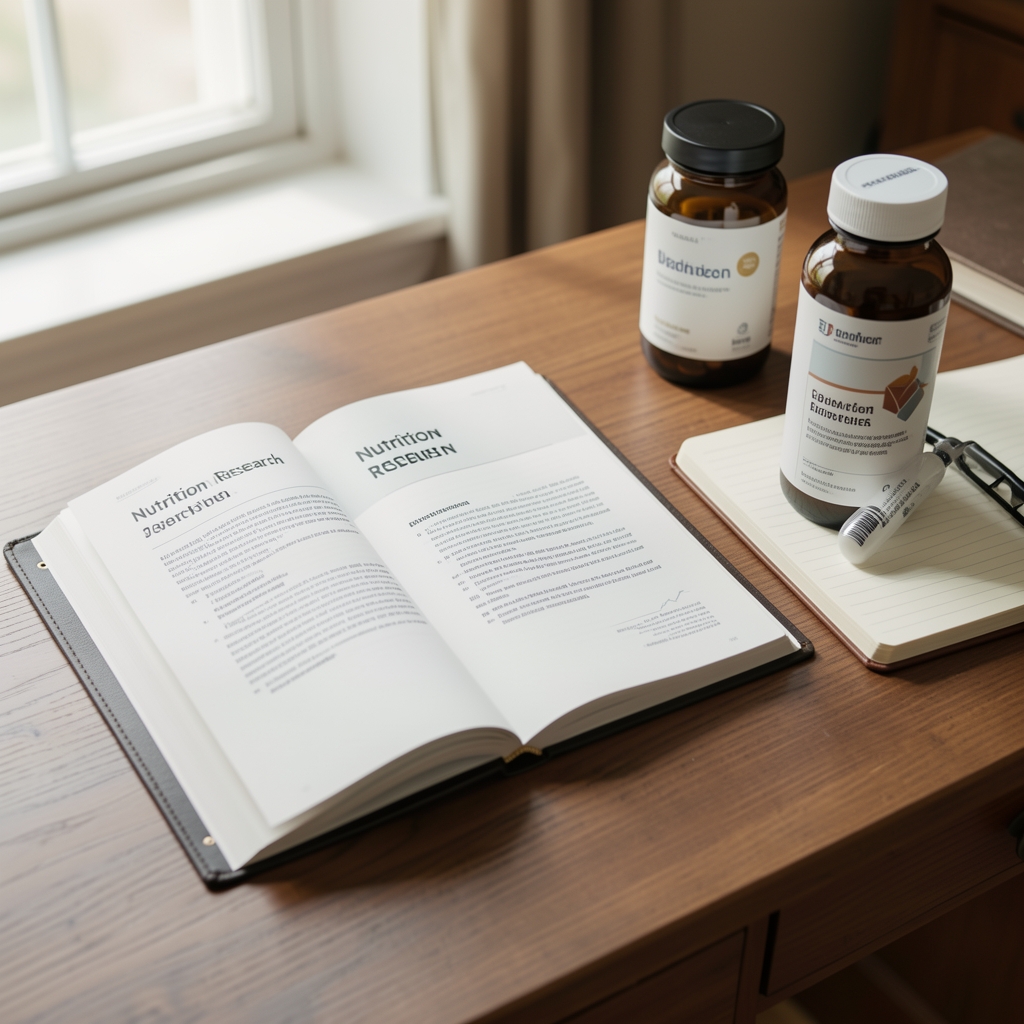
Jakarta, March 2026 — Archived in the editorial notes of Tarevon Letters across the first quarter of 2026 is a recurring observation: men who report consistent daily energy awareness tend to be those who maintain regular B-vitamin intake, whether from dietary sources or supplementation. This documentary overview draws on those archived notes and published nutritional literature to examine why the B-vitamins — as a group — appear with such frequency in the context of men's daily vitality.
The B-Vitamins: Eight Members, One Conversation
The B-vitamins are a group of eight water-soluble vitamins: thiamine (B1), riboflavin (B2), niacin (B3), pantothenic acid (B5), pyridoxine (B6), biotin (B7), folate (B9), and cobalamin (B12). Published nutritional research identifies this group as contributing to daily energy awareness and focus patterns — a function that makes them a natural area of editorial interest for a publication covering men's active lifestyle and nutritional habits.
Each member of this group has a distinct nutritional role. B12, for instance, contributes to the normal functioning of the nervous system and is found primarily in animal-derived foods — making it a common area of attention for men who follow plant-based or vegetarian diets. B6 contributes to protein metabolism, which is of particular interest to men with higher daily protein intake. Folate contributes to cell division and is commonly referenced in nutritional literature alongside B12 as part of a complementary pair.
The editorial desk notes that while each B-vitamin has a distinct profile, they are most commonly encountered in the supplement market as a B-vitamin complex — a formulation that combines all eight. This approach reflects a practical consideration: whole food sources of B-vitamins span a wide variety of foods, and a complex provides coverage across the group without requiring specific individual dosing decisions.
Documentary Notes: B-Vitamins in Active Jakarta Routines
In the course of this editorial project, the desk compiled archived observations from interviews conducted across January through March 2026. A common thread emerged: men who maintained consistent physical activity — gym training, running, cycling, or recreational sport — and who reported stable daily energy awareness most consistently were those who also demonstrated the greatest dietary variety and, in several cases, supplemented with a B-vitamin complex.
One observation from late January stood out. A 39-year-old editorial contact — who cycles to work three days a week and trains in the evenings — had recently shifted from a varied diet to a more restricted eating pattern during a period of high professional demands. Within approximately three weeks, he noted what he described as a "flatness" in his daily energy pattern. His dietary review revealed a sharp reduction in eggs, legumes, and whole grains — all significant B-vitamin sources — during that same period.
The editorial desk is careful not to draw causative conclusions from single observations. What is documented is the pattern: reduced dietary B-vitamin sources appeared alongside reduced daily energy awareness. This aligns with published nutritional literature noting that B-vitamins, being water-soluble, are not stored in significant quantities by the body and require regular replenishment through daily dietary intake or supplementation.

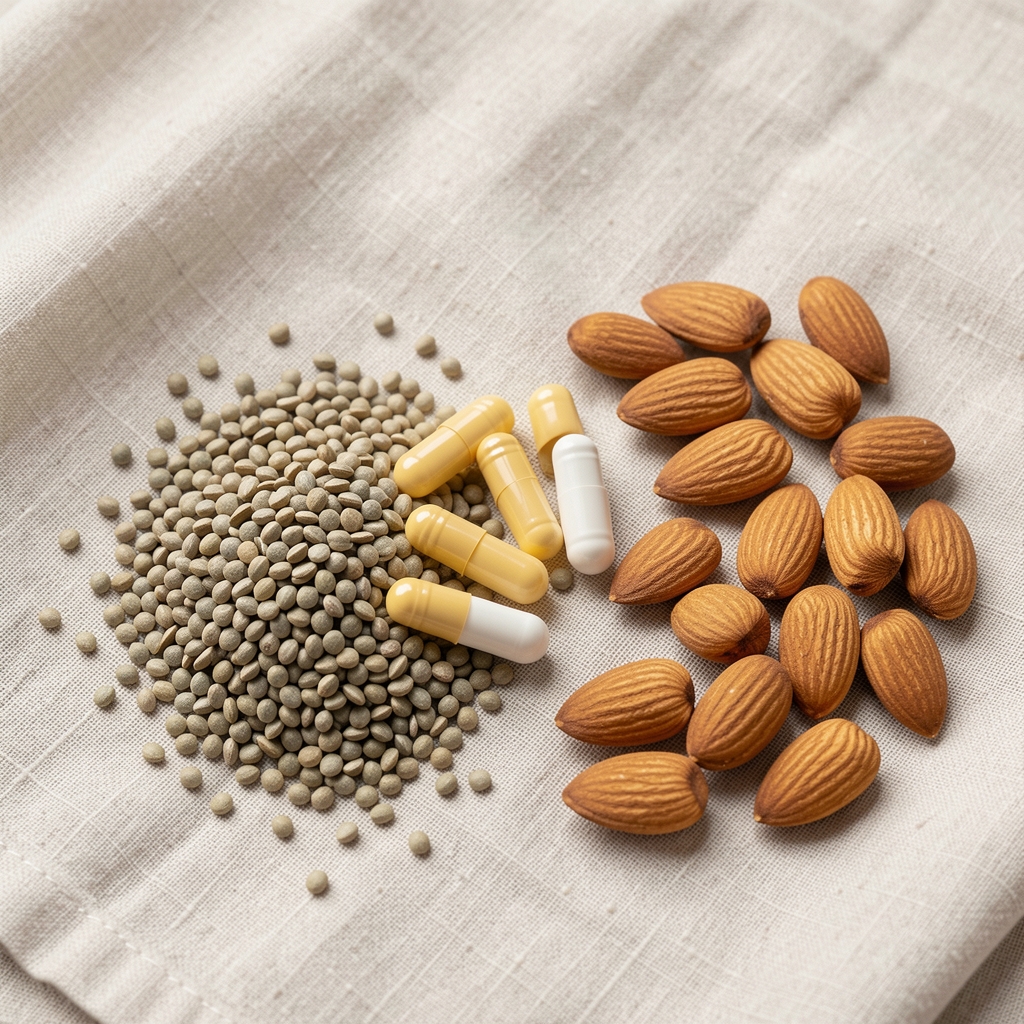
Whole food B-vitamin sources: eggs, leafy greens, legumes, and whole grains — the dietary foundation.
B12 and the Plant-Based Question
Vitamin B12 occupies a particular place in nutritional conversations about men's daily supplement routines. As the only B-vitamin found almost exclusively in animal-derived foods — meat, fish, dairy, and eggs — it is the most commonly supplemented B-vitamin among men who reduce or eliminate these food categories. Published nutritional research consistently identifies B12 status as a monitoring consideration for those following plant-forward or vegetarian eating patterns.
In Indonesia, where traditional eating patterns often include tempeh, tofu, eggs, and fish alongside rice, B12 intake from dietary sources is generally reasonable across the broader population. However, the editorial desk notes that urbanisation and the growing prevalence of convenience eating patterns — particularly among young professional men in Jakarta — may shift this picture in ways that are not yet fully captured in available nutritional research specific to this context.
Tempeh, a fermented soybean product native to Indonesia, has been the subject of some nutritional research regarding its B12 content. The editorial desk notes that findings here are mixed: while some fermented foods contain B12 produced by microorganisms during fermentation, the bioavailability of this form is a subject of ongoing discussion in the nutritional literature. This is an area worth following for those interested in plant-forward approaches to men's nutritional awareness.
"B-vitamins, being water-soluble, are not stored in significant quantities by the body and require regular replenishment through daily dietary intake or supplementation."
Tarevon Letters — Archival Notes, March 2026
B-Vitamin Complex in the Daily Supplement Stack
Among men who reported taking a daily supplement stack — typically a combination of two to four individual supplements — a B-vitamin complex appeared in approximately half of the cases documented during the editorial observation period. Its presence in the stack was most common among men who also trained regularly, suggesting an awareness of the relationship between physical output and B-vitamin replenishment needs.
The forms commonly available in the Indonesian supplement market include B-complex capsules ranging from basic formulations (covering the eight core B-vitamins at standard reference values) to higher-potency formulations positioning themselves toward active-lifestyle consumers. The editorial desk does not assess or endorse specific formulation strengths; the observation is simply that the market has diversified in response to growing consumer awareness of B-vitamin supplementation.
What the editorial notes suggest — and what published nutritional literature broadly supports — is that for most men eating a varied diet that includes animal proteins, eggs, and legumes, a B-vitamin complex acts as a nutritional safety net rather than a primary supply source. For men with narrower dietary patterns, particularly those with limited animal product consumption or high convenience-food reliance, the supplementation role may be more substantive.
Vitality Support: The Long View
The concept of daily vitality support — which appears frequently in the context of men's supplement marketing — is worth examining through an editorial lens. Vitality, in this context, is often used to describe a cluster of daily performance qualities: energy awareness, focus, physical endurance, and body balance. Published nutritional research associates B-vitamins with several of these domains, though the editorial desk notes that the language of supplement marketing frequently exceeds what the nutritional evidence strictly supports.
What the documented observations from Tarevon Letters' first quarter of 2026 suggest is more modest and more interesting than supplement marketing language: the men who reported the most consistent daily vitality awareness were those whose nutritional practices — whether through diet, supplementation, or a combination — reflected a broader pattern of nutritional engagement. They read nutritional research, adjusted their eating with deliberate attention, and treated supplementation as one variable among several rather than a single answer to a complex daily practice.
This observation — that vitality support is as much a practice of attention as it is a question of specific nutrients — sits at the centre of what Tarevon Letters aims to document. The B-vitamins are a chapter in that story, not the whole narrative. The whole food sources of these vitamins, the daily habits that sustain their intake, and the broader nutritional context in which they function are what the editorial desk continues to observe, document, and archive.
- 01 B-vitamins contribute to daily energy awareness and focus patterns; they are water-soluble and require regular dietary replenishment.
- 02 Whole food B-vitamin sources include eggs, meat, fish, legumes, whole grains, and dairy — foods common to varied Indonesian eating patterns.
- 03 B12 is found primarily in animal-derived foods; men following plant-forward diets may find monitoring B12 dietary intake a relevant area of nutritional attention.
- 04 A B-vitamin complex supplement appeared in approximately half of the daily supplement stacks documented during the observation period among active Jakarta men.
- 05 Consistent daily vitality awareness was most associated with broader nutritional engagement — varied diet, supplementation as complement, and active attention to eating patterns.
Articles published on Tarevon Letters are editorial in nature and reflect the writers' observations on men's dietary supplement habits and active lifestyle routines. The content is not intended as professional health advice. Readers with specific health concerns are encouraged to speak with a qualified health professional.